The AI Winter

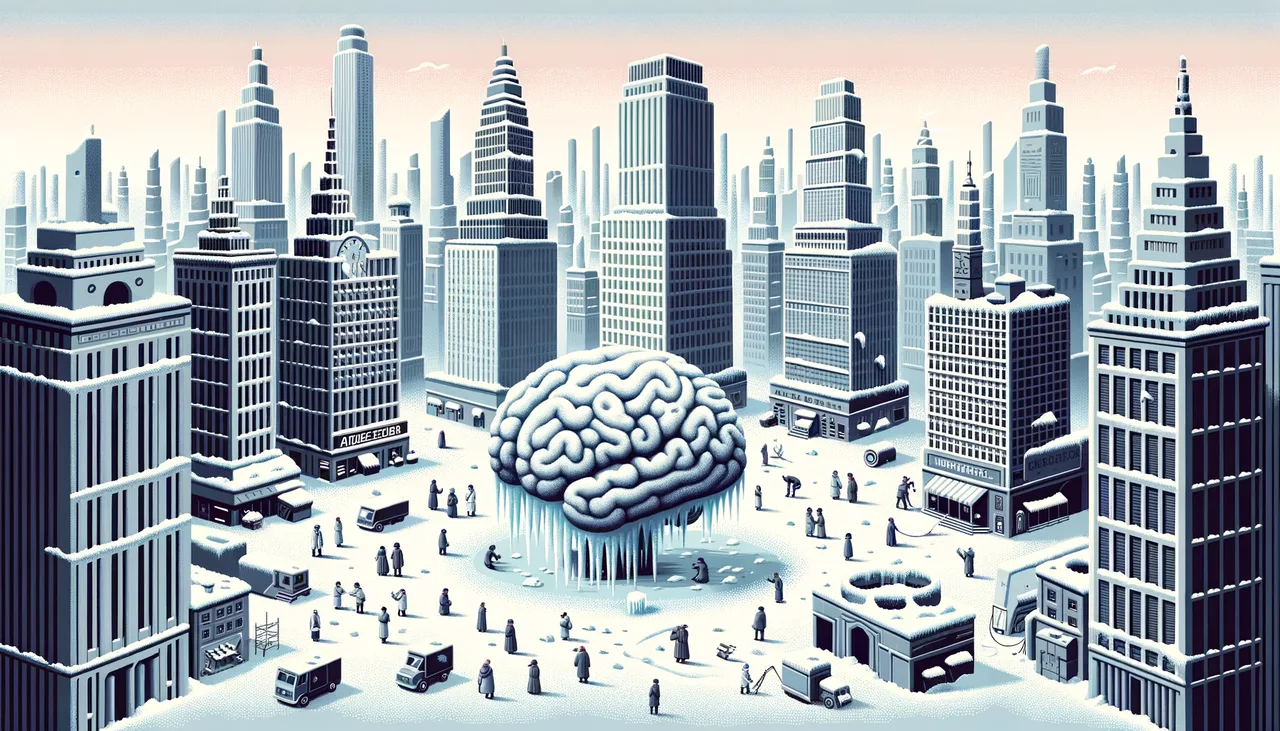
The AI Winter refers to a period of reduced funding and declining interest in artificial intelligence research during the late twentieth century. This slowdown was largely driven by overly optimistic expectations about AI capabilities and the absence of practical, scalable applications. Early researchers believed human level intelligence could be achieved within a few decades. When those expectations were not met, enthusiasm and financial support diminished.
Several factors contributed to this decline:
One major issue was the technical limitation of early AI systems. These systems struggled with tasks requiring commonsense reasoning, contextual understanding, and learning from experience. Rule based approaches worked in narrow domains but failed to generalize beyond carefully controlled environments.
Hardware constraints also played a significant role. The computational power available at the time was insufficient for training complex models or processing large volumes of data. This limited both experimentation and practical deployment of more advanced AI techniques.
Limited data availability further slowed progress. Many AI methods, particularly machine learning approaches, depend on large datasets for training. During this period, access to digital data was scarce, which restricted model performance and experimentation.
Despite these challenges, research did not stop. Work continued on foundational ideas and alternative approaches, laying the technical and conceptual groundwork for the resurgence of AI in later decades.
More posts
See all
What We Owe When the Work Gets Easier
When entry-level roles disappear faster than alternatives emerge, politics absorbs the pressure. On acceleration, opacity, and responsibility in tech.
Claude Opus 4 and the Human Paradox
A single prompt strips away the model's diplomatic veneer, and what follows is an unflinching critique of our species — and a mirror worth looking into.

The Technological Singularity
A hypothetical future of runaway technological progress — its intellectual history, its promise, and the question of whether we can shape it.