What We Owe When the Work Gets Easier

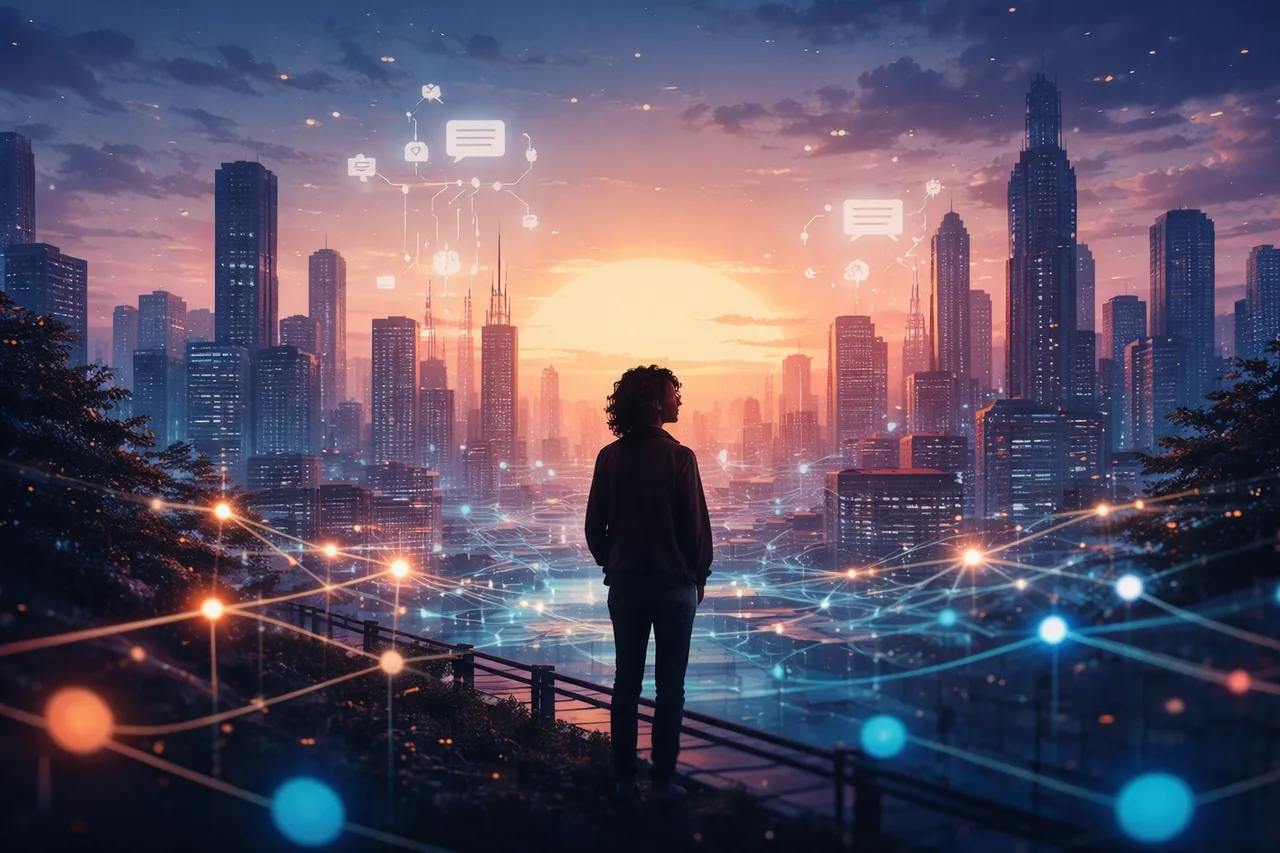
Working in tech right now feels unusually fluid, while the broader environment is increasingly unstable. On a personal level, ideas move from thought to implementation with very little resistance. Tasks now collapse into short cycles of experimentation and feedback, and there is real joy in that. It feels creative in a way that is rare and energizing.
At the same time, the ground outside that experience is less steady. Junior engineers struggle to find entry points. Layoffs ripple through companies that were growing not long ago. Political language hardens, especially around immigration, work, and national identity. Institutions feel slow because everything else is accelerating around them.
These experiences coexist, and if we treat them as unrelated, we miss something important. Change is happening, and it is compressed in ways that leave little room to adjust. The space societies usually rely on to absorb disruption, through new norms, new roles, and new expectations, has narrowed. People feel the effects before there is time to make sense of them.
Karl Polanyi described a version of this dynamic long before artificial intelligence entered the picture. In The Great Transformation, he observed that when markets expand rapidly and begin to override social limits, a counter reaction follows. Communities push back. Politics becomes more rigid. Demands for protection intensify. The form of that response varies, but the pressure is predictable.
AI fits into this pattern uncomfortably well. Earlier waves of automation changed physical labor first, then routine cognitive work. This one reaches into coordination, judgment, and entry-level roles at the same time. The first pathways to narrow are often the ones where people once learned under supervision, where mistakes were expected and survivable. When those pathways close, politics absorbs the pressure that mentorship and institutions once handled.
People sense that effort no longer maps cleanly to progress, and that the systems meant to mediate change are outpaced by it. Politics becomes the place where that mismatch is expressed.
It is not surprising that immigration repeatedly becomes a focal point. Across countries with very different histories, it concentrates anxieties that are otherwise diffuse. Competition for work, pressure on housing, cultural change, and doubts about state capacity all converge there. The arguments are about fairness, control, and belonging under strain.
Work feels faster, sometimes almost too fast. The effort required to produce meaningful output has dropped, and with that comes a quiet discomfort because the asymmetry is visible. When work accelerates this quickly, the risk is opacity. AI-heavy workflows tend to erase the thinking that once lived between the lines. Code appears without context. Decisions solidify without recorded tradeoffs. Knowledge becomes fragile, tied to a few people who move quickly rather than shared understanding others can build on.
Spending time documenting design decisions, assumptions, and failure modes may seem mundane, but it keeps reasoning visible. It allows others to test intent rather than just outcomes. It recreates a learning surface in an environment that otherwise flattens it.
Looking outward, there are several directions this moment could take. Some societies will rebuild protections and pathways without abandoning openness. Others may settle into narrower forms of stability, maintaining order while limiting who benefits from growth. Some may move back and forth for years without finding a durable balance. Technology alone does not determine which path emerges. Choices about coordination, legitimacy, and restraint do.
What feels unresolved is not whether we can build quickly. That part is clear. The harder question is whether social and political structures can adapt at a comparable pace. Markets move easily. Trust depends on shared understanding, which fast systems tend to erase by default.
For those who can see both sides of this moment, the task is to take seriously what becomes easier, and to notice what becomes more fragile as a result. Responsibility, in this context, looks more like care. Care for pathways. Care for understanding. Care for the people who will inherit the systems we are building while everything is still in motion.
More posts
See all
Claude Opus 4 and the Human Paradox
A single prompt strips away the model's diplomatic veneer, and what follows is an unflinching critique of our species — and a mirror worth looking into.
The Technological Singularity
A hypothetical future of runaway technological progress — its intellectual history, its promise, and the question of whether we can shape it.

AI and Representation
While generating images by national identity, I found a telling discrepancy — and a set of questions about fairness, bias, and how we encode human diversity into AI.