AI in Healthcare

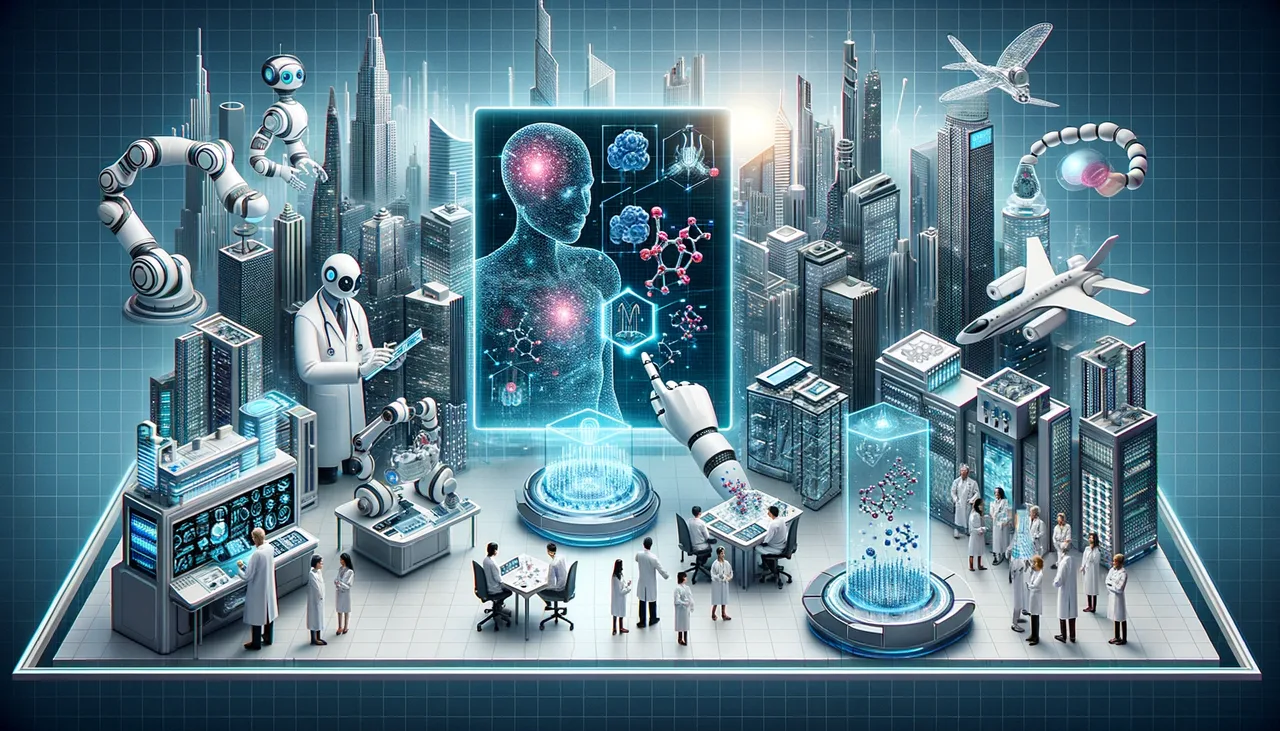
AI systems are used in healthcare for image analysis, risk estimation, and candidate screening in drug research. They process medical images, clinical records, and sensor data and produce outputs for clinician or researcher review. Results depend on training data, evaluation design, and workflow integration.
In radiology, models trained on labeled imaging datasets support segmentation, triage, and detection of specific findings in MRI, CT, and X ray studies. Some systems analyze repeated studies and clinical variables to estimate progression risk. Performance can change across scanners, protocols, and patient populations, so site level evaluation and monitoring matter.
In pathology, models classify tissue regions in digitized slides and highlight areas that match learned patterns associated with malignancy. Differences in staining, scanning, and labeling can change outputs, so cross site validation is required before clinical use.
In drug discovery, computational screening ranks candidate molecules and reduces the number that move to wet lab testing. Approaches include docking simulations, property prediction models, and generative models that propose new structures. These tools can shorten early research cycles, but experimental validation and clinical trials still determine safety and effectiveness.
In mental health settings, models analyze text, speech, or behavior signals to estimate risk markers. These systems require careful validation because labels are noisy and false positives carry real costs. Chatbots can provide structured support such as check ins, coping exercises, and routing to resources. Any medical claims should match the evidence and regulatory status.
Assistive devices use control software that maps sensor input to movement. Prosthetics and exoskeletons often use trained control policies and tuning for the user. Wearables support monitoring by collecting physiological signals, but those signals vary with activity, stress, and illness, so alerting needs conservative thresholds and clear escalation steps.
Genomics work uses models for variant calling, phenotype association, and risk estimation on sequencing and biobank datasets. Cohort composition affects results, and performance can vary across populations when training data is not representative.
Telemedicine platforms can include model outputs that summarize or prioritize incoming data for clinician review. Value depends on data integration, workflow design, and security controls that protect patient data during collection and transfer.
More posts
See all
What We Owe When the Work Gets Easier
When entry-level roles disappear faster than alternatives emerge, politics absorbs the pressure. On acceleration, opacity, and responsibility in tech.

Claude Opus 4 and the Human Paradox
A single prompt strips away the model's diplomatic veneer, and what follows is an unflinching critique of our species — and a mirror worth looking into.

The Technological Singularity
A hypothetical future of runaway technological progress — its intellectual history, its promise, and the question of whether we can shape it.